
Signs of Torticollis in Babies: What Parents Should Know
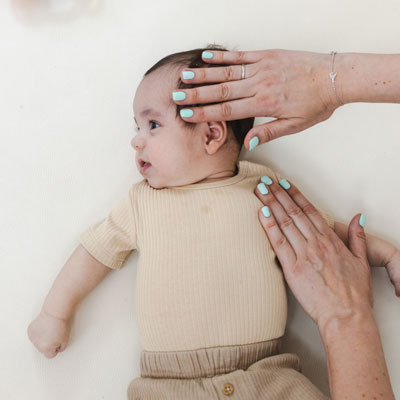
As a parent, it’s natural to pay close attention to every movement your baby makes. If you’ve noticed your baby consistently tilting their head to one side or always looking in the same direction, you may wonder whether it’s simply a preference or something more.
These can be signs of torticollis in babies, a condition that affects the muscles and movement of the neck. While infant torticollis is relatively common, recognizing it early gives your child the best opportunity to develop healthy movement patterns and avoid complications such as a flat spot on the head or delays in motor development.
What is torticollis?
Torticollis is a condition in which a baby’s head tilts toward one shoulder while the chin turns toward the opposite side. This often happens because the sternocleidomastoid muscle, a large neck muscle that connects the skull to the breastbone and collarbone, becomes tight or shortened on one side.
The most common type is congenital torticollis, meaning it is present at birth. It may develop because of a baby’s position in the womb, limited space before delivery, or mild birth related stress affecting the neck muscles. Less commonly, acquired torticollis can develop later due to injury or another medical condition.
Although hearing the word torticollis can be worrying, many babies respond well to early treatment. The key is recognizing the symptoms and seeking an evaluation if they persist.
9 signs of torticollis in babies
Every baby develops differently. However, these common signs may suggest that your child would benefit from a professional evaluation.
1. Your baby’s head always tilts to one side
A persistent head tilt is one of the easiest signs for parents to notice. Your baby’s head may consistently lean toward one shoulder while the chin points the opposite way. If the tilt remains the same over several days or weeks, it is a good idea to discuss it with your pediatrician.
2. Your baby prefers looking in one direction
Most babies naturally turn their heads to explore both sides of their surroundings. A baby with infant torticollis may strongly prefer looking in only one direction and resist turning the other way. Over time, this preference may affect normal neck movement and even influence head shape.
3. Your baby has difficulty turning their head both ways
As babies grow, they should gradually develop the ability to turn their head comfortably in both directions. If your baby easily looks one way but struggles to look the other, reduced range of motion caused by muscle tightness may be contributing.
4. Feeding is easier on one side
Some parents first notice torticollis during feeding. Your baby may nurse comfortably on one breast but become fussy when feeding on the other because turning their head feels uncomfortable. While this alone does not mean your baby has torticollis, it should be considered along with other symptoms.
5. A flat spot begins forming on the head
When babies consistently rest with their head to one side, pressure is placed on the same area of the skull. Over time, this can contribute to a flat spot, also called plagiocephaly. Identifying torticollis early may help prevent worsening head shape changes by encouraging more balanced movement.
6. Your baby dislikes tummy time
It’s normal for babies to need time to adjust to tummy time. However, if your baby consistently cries or avoids lifting their head because turning feels uncomfortable, neck tightness may be a contributing factor.
Since tummy time helps build strength in the neck, shoulders, and upper body, avoiding it for long periods may affect early motor development. If tummy time continues to be a struggle despite regular practice, it is worth discussing with your healthcare provider.
7. One shoulder appears higher than the other
Torticollis can sometimes affect your baby’s overall posture. You may notice one shoulder sitting slightly higher than the other because the muscles on one side of the neck remain tight.
This difference is often subtle, but when combined with a persistent head tilt or limited neck movement, it may indicate that your baby would benefit from a professional evaluation.
8. Your baby reaches motor milestones more slowly
Some babies with congenital muscular torticollis may take longer to develop head control, roll over, or reach other early milestones. Limited neck movement can make it harder for babies to move comfortably in both directions, reducing opportunities to build balanced strength.
While developmental delays have many possible causes, persistent movement preferences should never be ignored.
9. Your baby cries when turning their head
If your baby becomes upset when you gently encourage them to turn their head toward one side, it may be a sign of muscle tightness or limited mobility.
Parents should never force the movement. Instead, seek an evaluation from your pediatrician or another qualified healthcare provider to determine the cause and recommend the most appropriate care.
How do you fix torticollis in babies at home?
Home care can support your baby’s recovery, but it works best when combined with guidance from your pediatrician or pediatric physical therapist. The goal is to encourage balanced movement throughout the day without forcing your baby’s neck.
Gentle home exercises
Your healthcare provider may recommend simple stretching exercises that you can safely perform at home, such as:
- Gentle head turns: Slowly encourage your baby to turn their head toward the less preferred side while they are calm and lying on their back.
- Gentle side bends: Carefully tilt your baby’s ear toward the opposite shoulder, holding the position for a few seconds only if your baby remains relaxed.
Stop immediately if your baby cries intensely, strongly resists the movement, or appears to be in pain. Never force your baby’s neck beyond a comfortable range of motion.
Daily positioning strategies
Small changes throughout the day can also encourage more balanced neck movement.
- Increase supervised tummy time to strengthen the neck and shoulder muscles.
- Alternate breastfeeding or bottle feeding positions so your baby naturally turns both directions.
- Place toys, approach the crib, or interact with your baby from the less preferred side.
- Change carrying positions throughout the day instead of always holding your baby the same way.
While these strategies may help improve neck mobility, they are not a substitute for a professional evaluation. If your baby’s head tilt persists or movement remains limited, your pediatrician may recommend physical therapy or other supportive care based on your baby’s individual needs.
When should you consider a pediatric chiropractic evaluation?
Not every baby with a head preference needs chiropractic care. However, if the symptoms persist despite home positioning strategies or begin affecting your baby’s comfort and development, a pediatric chiropractic evaluation may be worth considering.
You may benefit from an evaluation if your baby:
- Consistently tilts their head to one side.
- Has difficulty turning their head equally in both directions.
- Prefers looking in only one direction.
- Struggles with breastfeeding or bottle feeding on one side.
- Develops a flat spot on the head.
- Becomes upset when turning their head.
- Shows signs of delayed motor development.
A pediatric chiropractic evaluation can assess your baby’s posture, neck mobility, spinal movement, and overall movement patterns. If additional care is needed, your chiropractor may also recommend working with your pediatrician or a pediatric physical therapist as part of a collaborative care plan.
How pediatric chiropractic care at Tinker Family Chiropractic may help
At Tinker Family Chiropractic, care begins with an assessment of how the baby moves, including posture, neck rotation ability, spinal movement, and movement patterns at different stages of development.
Each recommendation is tailored to the baby’s individual needs. Parents may be guided on posture, tummy time, and simple activities to do at home. When necessary, the clinic may suggest that families consult further with a pediatrician or a physical therapist.
Pediatric chiropractic does not replace medical care. It can be part of a collaborative plan to help support a baby’s comfortable movement and more balanced development.
Helping your baby move with confidence
Recognizing the signs of torticollis in babies is the first step toward supporting healthy growth and development. While many babies respond well to early, conservative care, timely evaluation can help identify movement restrictions before they begin affecting feeding, head shape, or motor milestones.
At Tinker Family Chiropractic, Dr. Brittany Tinker provides gentle pediatric chiropractic evaluations that assess posture, neck mobility, spinal movement, and developmental patterns. Our family centered approach focuses on understanding your child’s unique needs while working collaboratively with your pediatrician or physical therapist whenever appropriate. If you have concerns about your baby’s neck movement or development, contact us to schedule a gentle pediatric evaluation and learn what next steps may be appropriate.
Frequently asked questions
Can tummy time help?
Yes. Regular, supervised tummy time helps strengthen the muscles of the neck, shoulders, and upper body. If your baby has torticollis, your healthcare provider may recommend specific positioning techniques to make tummy time more comfortable.
Is pediatric chiropractic safe for babies?
Pediatric chiropractic care uses gentle techniques that are adapted for an infant’s developing body. At Tinker Family Chiropractic, every baby receives an age appropriate assessment before any care is recommended.
When should my baby be evaluated?
If your baby has a persistent head tilt, limited neck movement, difficulty feeding on one side, or other signs of torticollis in babies, schedule an evaluation with your pediatrician.
$69
Exam + X-Rays
Once you qualify for care, the doctor will go over the next steps, and any cost associated with care before moving forward.