
How to Relieve Severe Back Pain During Pregnancy?

If you’re expecting and dealing with nagging discomfort in your lower back, you’re far from alone. Back pain during pregnancy affects up to 70% of expectant mothers, according to research by Ostgaard et al. in the Spine Journal.
But here’s the good news: you don’t have to grit your teeth and bear it for nine months. There are safe, effective strategies to find relief and we’re here to walk you through them.
Understanding Back Pain During Pregnancy
Why Does It Happen?
Your body undergoes incredible transformations during pregnancy. As your baby grows, your center of gravity shifts forward, putting extra stress on your lower back. Meanwhile, pregnancy hormones like relaxin loosen your ligaments and joints to prepare for delivery – but this can also make your spine less stable.
The most common types include:
- Lower back pain – Concentrated in the lumbar region
- Pelvic girdle pain – Felt around the pelvis and hips
- Sciatica – Sharp, shooting pain down the leg
When Does Pain Typically Strike?
Most women notice back pain during pregnancy starting in the second trimester, around weeks 18-24. However, some experience discomfort earlier, especially during subsequent pregnancies. Pain often intensifies in the third trimester as your baby gains weight rapidly.
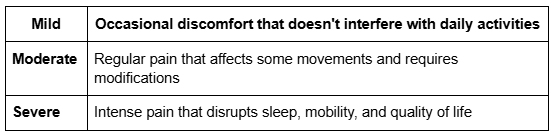
Severity Levels
Common Risk Factors
You’re more likely to experience lower back pain during pregnancy if you:
- Had back pain before pregnancy
- Are carrying multiples
- Have poor core strength
- Maintain a sedentary lifestyle
- Had back pain during a previous pregnancy
Safe Relief Strategies for Back Pain During Pregnancy
Let’s dive into practical, proven methods to ease your discomfort. The key is combining several approaches for maximum relief.
Prenatal Chiropractic Care
As a chiropractor in Mt. Juliet, TN, we’ve seen firsthand how gentle spinal adjustments can transform a pregnant woman’s comfort level. Prenatal chiropractic care focuses on proper alignment of your spine and pelvis, which becomes increasingly important as your body changes.
Benefits include:
- Reduced pressure on spinal nerves
- Improved posture and balance
- Better pelvic alignment for labor
- Decreased muscle tension
A study by George et al. in the Journal of Manipulative and Physiological Therapeutics found that 75% of pregnant women reported relief after receiving chiropractic care. We typically recommend adjustments every 2-4 weeks in the first and second trimesters, increasing to weekly visits in the third trimester.
The beauty of prenatal chiropractic care is that it works hand-in-hand with exercise and lifestyle changes. When your spine is properly aligned, exercises become more effective and daily movements feel easier.
Exercises and Stretches
Movement is medicine but gentle is the name of the game. Prenatal exercises for back pain strengthen the muscles supporting your spine without putting you or your baby at risk.
Try these effective moves:
- Pelvic tilts – ie on your back (early pregnancy) or do them on all fours. Rock your pelvis gently to strengthen your core. Aim for 10-15 repetitions, 2-3 times daily.
- Cat-cow stretches – On hands and knees, arch your back like a stretching cat, then dip your belly toward the floor. This mobilizes your entire spine. Repeat 8-10 times.
- Child’s pose – Kneel and sit back on your heels, extending arms forward. This releases lower back tension beautifully.
- Prenatal yoga – Classes designed for pregnancy incorporate safe stretches and breathing techniques.
Duration tips: Aim for 20-30 minutes of gentle exercise most days. Listen to your body – if something hurts, stop immediately.
Lifestyle and Ergonomic Modifications
Small changes in how you move throughout the day make a massive difference. Think of these as pregnancy posture tips that protect your spine during everyday activities.
Posture pointers:
- Sitting: Keep feet flat on the floor, use a small pillow behind your lower back, and avoid crossing your legs
- Standing: Distribute weight evenly on both feet, slightly bend your knees, and imagine a string pulling the crown of your head toward the ceiling
- Walking: Take shorter strides and wear supportive shoes with cushioned soles
Safe lifting technique:
Instead of bending at the waist, squat down by bending your knees. Keep the object close to your body and use your legs – not your back – to lift. Better yet, ask for help with anything heavy.
Sleep solutions:
Side sleeping (especially on your left side) is best for circulation and takes pressure off your back. Place a pillow between your knees and another under your belly for support. A full-body pregnancy pillow can be a game-changer.
Additional support tools:
- Supportive, low-heeled shoes
- Maternity support belts for extra stability
- Ergonomic office chairs if you’re still working
Home Remedies and Self-Care
These simple pregnancy pain management techniques provide relief right at home, on your schedule.
Heat and cold therapy:
Apply a warm (not hot) compress to sore muscles for 15-20 minutes. Avoid heating pads directly on your abdomen. For inflammation, try a cold pack wrapped in a towel. Alternate between the two for best results.
Prenatal massage:
Schedule sessions with a certified prenatal massage therapist. They know exactly which techniques are safe and effective during pregnancy.
Stay gently active:
Short walks throughout the day keep your muscles engaged without overexertion. Even 10-minute strolls make a difference. Swimming is another excellent option – the water supports your weight while you move freely.
Additional relief methods:
- Foam rolling (gentle pressure on tight muscles)
- Resistance band exercises for strengthening
- Warm baths (keep water temperature below 100°F)
Daily Activity Tips
Pregnancy back pain relief extends beyond dedicated exercise time – it’s about moving smartly all day long.
Managing Household Chores
Break tasks into smaller chunks. Instead of vacuuming the entire house at once, do one room at a time with rest breaks. When loading the dishwasher, place a foot on a stool to reduce back strain. For laundry, sit on a chair while folding instead of bending over.
Ergonomic Adaptations
- In the car: Adjust your seat closer to the steering wheel to avoid reaching. Use a lumbar support cushion and take breaks on long drives.
- At your desk: Position your computer screen at eye level. Keep feet flat on the floor or on a footrest. Stand up and stretch every 30 minutes.
- In the kitchen: Store frequently used items at waist height. Use a step stool for high shelves rather than reaching and straining.
Balancing Activity and Rest
This is crucial – your body needs recovery time. Rest doesn’t mean being completely sedentary, but it does mean listening when your body says “slow down”. Alternate between activity and rest periods throughout the day.
Takeaways
Back pain during pregnancy stems from multiple factors: hormonal changes, weight gain, postural shifts, and ligament laxity. While it’s incredibly common, you have numerous safe options for relief.
Remember, every pregnancy is unique. What works wonderfully for one woman might not be perfect for another. That’s why professional guidance matters – especially from providers experienced in pregnancy pain management.
At Tinker Family Chiropractic, we specialize in safe, gentle care for expectant mothers. Our approach to prenatal chiropractic care is customized to your trimester, your symptoms and your goals.
If you’re on Mt. Juliet area and searching for a chiropractor Mt. Juliet, TN who truly understands pregnancy-related discomfort, we’d love to help. We’ll create a personalized plan that addresses your specific needs and fits seamlessly into your prenatal care routine.
Because here’s what we believe: pregnancy should be a time of excitement and anticipation – not constant pain. With the right support and proactive strategies, you can enjoy these precious months feeling stronger, more comfortable, and confident in your body’s incredible journey.
Book your consultation today and take the first step toward a more comfortable pregnancy.