What Causes a Herniated Disc? Symptoms, Risk Factors and Treatment
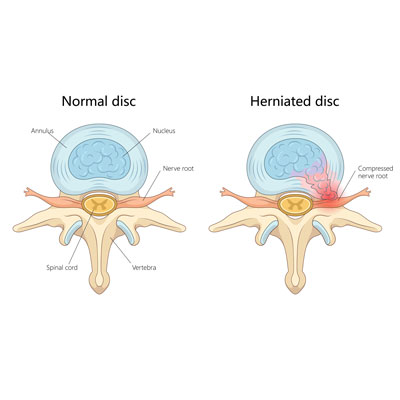
What causes a herniated disc? Age-related disc degeneration, repetitive strain, heavy lifting, and sudden injuries are common contributing factors. A herniated disc occurs when the soft inner material pushes through a weakened outer layer, potentially irritating nearby nerves.
This condition can cause back or neck pain, numbness, tingling, or muscle weakness. Understanding its causes and symptoms can help you explore appropriate treatment options.
At Tinker Family Chiropractic, we provide personalized chiropractic care in Mt. Juliet, TN, to support spinal mobility and manage related musculoskeletal discomfort.
What is a herniated disc?
Your spine contains flexible discs between the bones called vertebrae. These discs cushion the spine and allow your back to move comfortably.
Each disc has two main parts:
- Soft inner center: A gel-like material that absorbs pressure.
- Tough outer layer: A protective ring that keeps the inner material contained.
When the outer layer becomes damaged, disc material can extend beyond its normal position and irritate nearby nerves.
This condition is also called a slipped disc or ruptured disc, although the disc does not actually slip out of place.
What causes a herniated disc?
Herniated discs can develop gradually or result from physical strain or injury. Several factors may increase the risk:
- Age related disc changes: Discs gradually lose water and flexibility, making the outer layer more likely to develop small tears.
- Repetitive movements: Frequent bending, twisting, or lifting can place repeated stress on spinal discs.
- Heavy lifting: Lifting heavy objects, particularly while twisting, may increase the risk of disc injury.
- Sudden injuries: Falls or other physical injuries can sometimes damage a spinal disc.
- Lifestyle factors: Excess body weight, smoking, and physically demanding work may increase the risk.
In many cases, people cannot identify one specific movement or event that caused their herniated disc.
What are the symptoms of a herniated disc?
Common herniated disc symptoms include pain, numbness, tingling, and muscle weakness. The location of these symptoms depends on which spinal disc is affected.
Some people experience significant discomfort, while others have no noticeable symptoms.
The table below compares symptoms in the two most commonly affected areas.
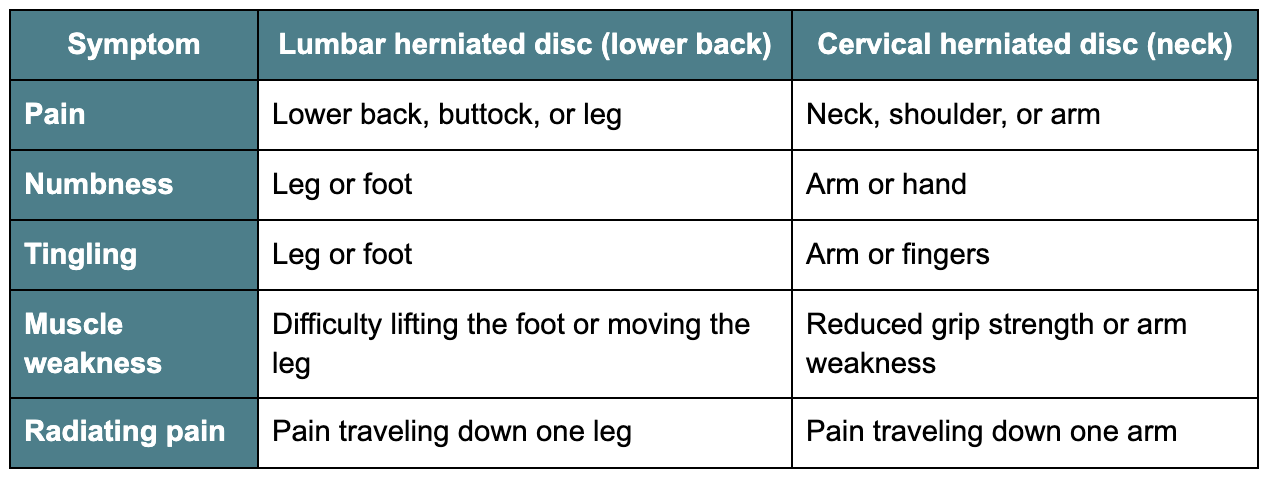
A lumbar herniated disc may irritate nerves that contribute to the sciatic nerve, causing sciatica with pain that travels down the leg.
However, these symptoms can also result from other conditions. A medical evaluation can help identify the underlying cause.
How is a herniated disc diagnosed?
Diagnosis generally begins with a review of symptoms, medical history, and a physical examination.
A healthcare professional may assess:
- Pain patterns: Location and whether symptoms radiate into the limbs.
- Muscle strength: Signs of weakness affecting specific movements.
- Sensation: Areas of numbness or tingling.
- Reflexes: Possible changes associated with nerve involvement.
An MRI may be recommended when symptoms persist, significant nerve compression is suspected, or imaging could influence treatment decisions.
X-rays cannot directly show a herniated disc, although they may help identify other spinal abnormalities. Not every patient requires immediate imaging.
What are the treatment options for a herniated disc?
Many people improve with nonsurgical treatment. The appropriate approach depends on symptom severity, neurological findings, and individual health needs.
Nonsurgical treatment options
Conservative care may include:
- Activity modification: Avoiding aggravating movements while remaining reasonably active.
- Physical therapy: Improving strength, flexibility, and movement through targeted exercises.
- Medication: Managing pain and inflammation under medical guidance.
- Spinal injections: Providing temporary symptom relief in selected cases.
Treatment should be reassessed if symptoms persist or worsen.
Can chiropractic care help with a herniated disc?
Chiropractic care may help selected patients manage associated back or neck discomfort through appropriate manual techniques, movement guidance, and rehabilitation exercises.
However, chiropractic adjustments do not repair a torn disc, and spinal manipulation is not suitable for everyone.
Patients with progressive neurological weakness or signs of serious nerve compression should receive medical evaluation before manual treatment.
When is surgery necessary?
Surgery may be considered when severe symptoms persist despite appropriate conservative care or when significant nerve compression causes concerning neurological problems.
A specialist can determine whether surgery is appropriate based on symptoms, examination findings, and imaging results.
How Can You Manage Herniated Disc Pain?
Although not every herniated disc can be prevented, certain habits may reduce spinal strain and support recovery.
- Stay gently active: Short walks and comfortable movement can help prevent unnecessary stiffness.
- Avoid aggravating activities: Limit heavy lifting, repetitive bending, or twisting when these worsen symptoms.
- Use heat or cold: Cold packs or gentle heat may provide temporary relief.
- Practice safer lifting: Keep objects close to your body and avoid twisting while carrying weight.
- Strengthen supporting muscles: Appropriate exercises may improve spinal stability during recovery.
Maintaining a healthy weight and avoiding smoking may also support long-term spinal health.
When should you see a doctor for a herniated disc?
Seek medical evaluation when back or neck pain spreads into an arm or leg, particularly with persistent numbness, tingling, or weakness.
Seek emergency medical attention for:
- New bladder or bowel dysfunction: Difficulty controlling urination or bowel movements, or inability to urinate.
- Saddle numbness: Reduced sensation around the groin, inner thighs, or buttocks.
- Rapidly worsening weakness: Increasing leg weakness or difficulty walking.
These symptoms may indicate serious nerve compression, including cauda equina syndrome, which requires urgent evaluation.
Managing herniated disc symptoms with the right care
Persistent back or neck discomfort can make everyday activities more difficult. Identifying the source of your symptoms is an important step toward finding appropriate care.
At Tinker Family Chiropractic, Dr. Brittany Tinker provides chiropractic care and individualized spinal rehabilitation to support patients experiencing back and neck discomfort.
We take time to understand your concerns, assess your mobility, and discuss care options based on your individual needs.
If discomfort is affecting your daily life, contact us to discuss whether our services may be appropriate for you.
Frequently asked questions about herniated discs
Can poor posture cause a herniated disc?
Poor posture alone does not necessarily cause a herniated disc. However, prolonged awkward positions and repetitive spinal loading may contribute to discomfort and mechanical strain, especially when combined with other risk factors.
Can a herniated disc heal on its own?
Yes. Many herniated discs improve without surgery. In some cases, the body gradually absorbs part of the displaced disc material, reducing pressure or irritation around nearby nerves.
How long does a herniated disc take to heal?
Some people notice improvement within several weeks, while others require months. Recovery depends on symptom severity, nerve involvement, and individual health factors.
Can you walk with a herniated disc?
Gentle walking is often appropriate if it does not worsen symptoms. Start with manageable distances and seek medical advice if walking increases radiating pain, numbness, or weakness.
$69
Exam + X-Rays
Once you qualify for care, the doctor will go over the next steps, and any cost associated with care before moving forward.