
Cervicogenic Headache: What It Is and How to Find Relief
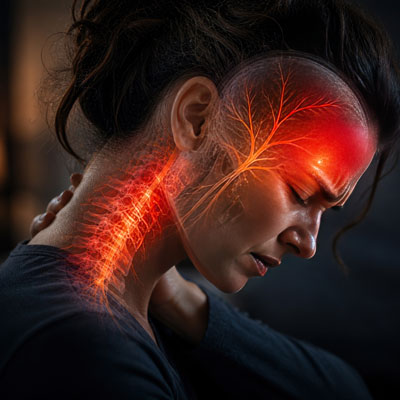
A cervicogenic headache is a headache that starts from a problem in the neck, even though much of the pain is felt in the head. The pain may begin near the base of the skull and travel toward the temple, forehead, or behind one eye.
What makes this headache different is often the connection to the neck. Stiffness, limited movement, or pain that changes when you turn or hold your neck in certain positions can provide important clues.
What is a cervicogenic headache?
A cervicogenic headache is classified as a secondary headache. That means another problem is responsible for producing the head pain. In this case, the source involves the cervical spine or surrounding tissues in the neck.
Why neck pain can be felt in the head
The pain can travel because nerves in the upper neck share pathways with nerves that carry sensation from areas of the head and face. As a result, the brain may receive pain signals from the neck while you feel the discomfort somewhere in your head.
This is called referred pain. This distinction matters. Where a headache hurts does not always tell you where the problem begins.
5 common symptoms of cervicogenic headache
Cervicogenic headache often follows a recognizable pattern rather than appearing as isolated head pain. You may notice:
- One-sided pain: Head discomfort that stays mainly on one side.
- Pain pattern: Pain that begins around the upper neck or base of the skull and travels toward the temple, forehead, or behind one eye.
- Neck stiffness: Difficulty turning or bending your head fully.
- Movement triggers: Pain that becomes worse after holding your neck in one position or moving it in certain angles.
- Shoulder tension: Discomfort occurring in the shoulder or upper back alongside the headache.
Not everyone experiences the same pattern. One-sided pain, for example, can also occur with migraine. The more useful clue is often how the headache behaves together with the neck.
Diagnosing the source: neck movement vs. pain location
Imagine that your headache becomes stronger every time you turn your head to the right, look upward, or spend an hour working with your head pushed forward. That relationship is important.
Reduced neck movement and headache that becomes worse with certain cervical movements are among the features considered when evaluating cervicogenic headache.
Daily habits and “text neck”
Daily positions can also aggravate an already sensitive neck. Long periods looking down at a phone or leaning toward a computer screen, for example, may contribute to text neck syndrome and increase neck stiffness.
This does not mean poor posture automatically causes cervicogenic headache. Instead, the pattern helps show whether the neck may be involved.
Cervicogenic headache vs. migraine vs. tension headache
Cervicogenic headache can resemble migraine or tension headache, especially when symptoms overlap. Use this comparison table to understand the core differences:
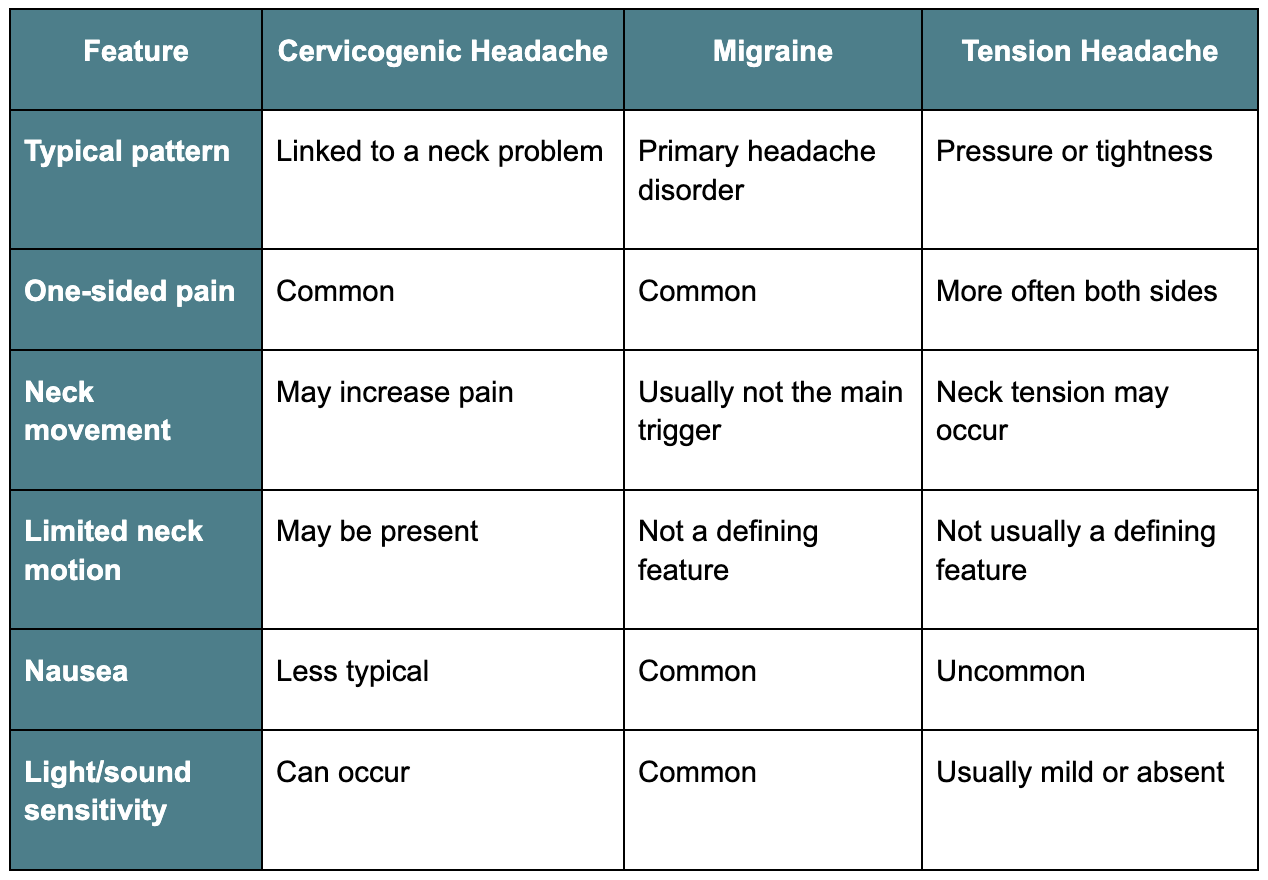
Note: This table provides clues, not a diagnosis. Migraine can include neck pain, and cervicogenic headache can sometimes include symptoms normally associated with migraine. That is why looking at the source and behavior of the pain is more useful than relying on one symptom.
Common causes of cervicogenic headache
There is not one single neck problem behind every cervicogenic headache. Possible sources or contributing factors include:
- Upper cervical structures: Problems involving joints or other tissues in the upper cervical spine.
- Reduced mobility: Limited movement in the cervical spine or irritation involving the upper cervical joints.
- Wear and tear: Age-related cervical spine changes.
- Past trauma: Previous neck injuries like whiplash (sudden forward and backward movement of the head).
Repetitive positions may also keep an existing neck problem irritated. This can happen during desk work, driving, phone use, or other activities that keep the head and neck in the same position for long periods. The important question is whether a particular movement, position, or cervical problem is consistently connected to the headache.
Why an X-ray alone cannot explain your headache
Imaging can provide useful information about the structure of the cervical spine, but an image does not tell the entire story. Someone can have changes visible on an X-ray without those findings being the source of the headache.
For that reason, a proper evaluation involves understanding:
- Where the pain starts and travels.
- Which movements make it better or worse.
- How well the neck moves.
- Whether there has been a previous neck injury.
Treatment and relief options
There is no single home remedy that works for every cervicogenic headache. Relief depends on what is contributing to the neck problem.
1. Adjust the positions you repeat every day
Instead of trying to sit perfectly all day, focus on reducing long periods in one position.
- Raise screens closer to eye level.
- Change positions regularly.
- Take short movement breaks during desk work.
- Hold your phone higher instead of dropping your head toward your chest.
2. Restore movement instead of chasing perfect posture
When appropriate, gentle neck mobility and strengthening exercises can help restore movement and improve muscular support. Exercises may include controlled neck movement, chin tucks, or strengthening for the neck and upper back.
Caution: Stop an exercise if it causes a significant increase in headache, dizziness, numbness, or weakness.
3. Use heat or cold for temporary comfort
- Heat: Feels helpful when the neck is stiff or tense.
- Cold: Feels better after an activity that has irritated the area.
4. Address recurring neck problems
If headaches keep returning with neck stiffness or restricted movement, an evaluation can help determine whether a mechanical neck problem may be contributing. Depending on the findings, conservative care may include chiropractic care, targeted exercise, and spinal rehabilitation.
When to seek prompt medical attention
A new or unusual headache should not automatically be assumed to come from the cervical spine. Seek immediate medical evaluation for any of these “red flag” symptoms:
- A sudden and extremely severe headache (thunderclap headache).
- Headache accompanied by a fever and severe neck stiffness.
- New numbness, weakness, confusion, or difficulty speaking.
- New balance issues or significant vision problems.
- Headache following significant head or neck trauma.
- A major unexplained change in your usual headache pattern.
How Tinker Family Chiropractic evaluates neck-related headaches
When headache and neck symptoms keep appearing together, the goal is to understand the pattern rather than focusing only on where it hurts.
At Tinker Family Chiropractic, we review your symptoms and look at posture, cervical movement, spinal alignment, and function. When appropriate, imaging can provide additional information about spinal structure.
Those findings help determine whether conservative care may be appropriate and whether chiropractic care or personalized spinal exercises and rehabilitation could be included in your care plan.
If recurring headaches are occurring alongside neck pain or stiffness, contact us to schedule an evaluation.
Common questions about cervicogenic headaches
Can cervicogenic headaches cause pain behind the eye?
Yes. Referred pain from the neck can sometimes travel toward the forehead, temple, or behind one eye.
Can cervicogenic headaches cause dizziness?
Some people may experience dizziness along with neck related headaches. However, dizziness has many possible causes and should not automatically be attributed to the neck.
How long can a cervicogenic headache last?
The duration varies. A headache may last for hours or recur over time depending on the underlying neck problem and aggravating factors.
Can cervicogenic headaches come and go?
Yes. Symptoms may come and go, especially when certain neck movements, prolonged positions, or activities repeatedly aggravate the underlying problem.
$69
Exam + X-Rays
Once you qualify for care, the doctor will go over the next steps, and any cost associated with care before moving forward.