
Migraine vs Tension Headache: How to Tell the Difference

Migraine vs tension headache can feel similar at first, but several symptoms can help tell them apart. Migraine often causes throbbing pain, nausea, and sensitivity to light or sound. A tension headache usually feels like steady pressure or tightness around the head.
Knowing your headache pattern can help you choose the right next step. At Tinker Family Chiropractic in Mt. Juliet, TN, we also evaluate neck movement and posture when recurring headaches occur with neck discomfort.
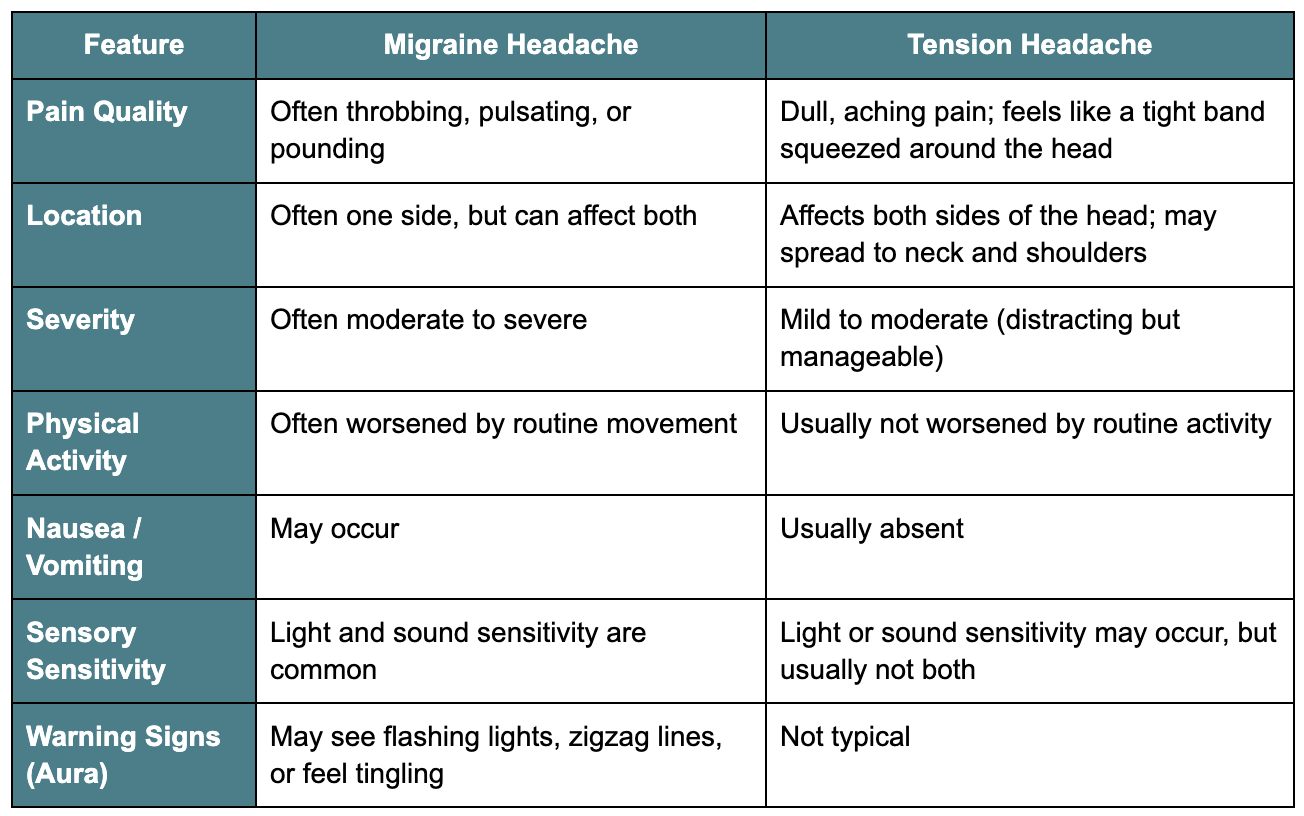
What does a tension headache feel like?
A tension headache feels like a constant, dull ache rather than a throbbing sensation. Most people describe it as a tight band or vice squeezing around their head.
Common symptoms of a tension headache include:
- Mild to moderate pain that is distracting but manageable.
- Pressure across the forehead, temples, or back of the head.
- Pain that usually affects both sides of the head.
- Tenderness in the scalp, neck, and shoulder muscles.
- Pain that usually does not worsen with routine activities like walking or climbing stairs.
What triggers a tension headache?
Stress, poor sleep, eye strain, and skipped meals are common culprits. Additionally, spending hours looking down at a phone or laptop strains the neck and shoulders, a posture widely known as text neck syndrome.
What does a migraine feel like?
Migraine is a neurological disorder that can cause moderate to severe head pain along with other symptoms such as nausea and sensitivity to light or sound. It is much more than just a severe headache.
Common migraine symptoms include:
- Throbbing or pulsing pain that feels like a heartbeat in your head.
- Moderate to severe pain that disrupts your daily tasks.
- Pain usually on one side of the head, though it can affect both.
- Nausea or vomiting during the attack.
- Extreme sensitivity to light, sound, or even strong smells.
- Pain that worsens with movement or routine physical activity.
Because light and sound may become uncomfortable, some people prefer to rest in a dark, quiet room until symptoms improve.
What is a migraine aura?
A migraine aura is a collection of temporary neurological symptoms that develop before or during the headache phase.
An aura can cause:
- Visual disturbances: Flashing lights, zigzag lines, or blind spots.
- Physical sensations: Tingling or numbness in the hands or face.
- Speech difficulties: Temporary trouble speaking clearly.
Note: Most people experience migraines without aura. You do not need to have an aura to be diagnosed with a migraine.
Common migraine triggers
Migraine triggers are highly personal and vary from person to person. The most common examples include:
- Hormonal changes (especially during menstrual cycles in women)
- Irregular sleep patterns (too much or too little sleep)
- High stress levels or the sudden crash after stress subsides
- Environmental factors like bright lights, flashing screens, or strong perfumes
- Dietary patterns, including skipped meals or alcohol for some people.
What may help each type of headache?
Treatment depends on the type of headache you have and how often it occurs.
What may help a tension headache
Some simple measures may help with an occasional tension headache:
- Take a screen break: Step away from your computer or phone for 15 minutes.
- Stay hydrated: Drink water regularly, especially if you have not had enough fluids during the day.
- Apply gentle heat: Use a heating pad on your tight neck or shoulder muscles.
- Move gently: Comfortable neck and shoulder movements may help if muscle tension is present.
- Rest: Lie down in a comfortable position and practice deep breathing.
Note on medication: Over-the-counter (OTC) pain relievers can help when used as directed. However, if you rely on them regularly, talk to a doctor. Frequent use can lead to medication overuse headaches (rebound headaches).
How to manage a migraine attack
Some people find relief by:
- Resting in a dark, quiet room: This eliminates painful sensory input.
- Limiting all screens: Turn off TVs, computers, and bright lights.
- Using a cool compress: Place a cold pack on your forehead or the back of your neck.
- Staying hydrated: Sip water slowly if you feel nauseous.
- Follow your treatment plan: Take migraine medication according to the instructions provided by your healthcare provider.
How to reduce recurring headache triggers
Prevention starts with identifying your personal lifestyle triggers. Healthy daily habits may help you manage common headache triggers:
- Keep a regular sleep schedule: Go to bed and wake up at the same time every day.
- Eat meals consistently: Avoid going long periods without eating if skipped meals tend to trigger your headaches.
- Manage daily stress: Practice mindfulness, yoga, or taking regular desk breaks.
- Fix your desk posture: Avoid “forward head posture” (text neck) when using laptops or phones, as it places heavy mechanical stress on your neck and shoulders.
Why you should keep a “Headache Diary”
Instead of guessing your triggers, record when the pain starts, your symptoms, sleep, meals, activities, and how long the headache lasts. This information can help your healthcare provider better understand your headache pattern.
When headaches occur with neck pain
Neck stiffness, shoulder tension, and headaches often go hand-in-hand. Long hours at a desk or limited neck movement can cause significant musculoskeletal discomfort.
However, neck pain does not automatically mean your neck is causing the headache. Migraine, tension headaches, and cervicogenic headaches can have overlapping symptoms, so neck pain alone does not identify the type of headache. If headaches repeatedly occur with neck stiffness or limited movement, an evaluation can help determine what may be contributing to your symptoms.
When to seek immediate medical care
Seek immediate medical attention if your headache is accompanied by any of the following warning signs:
- A sudden, explosive, and extremely severe headache (“Thunderclap” headache).
- New weakness, numbness, or paralysis on one side of your body.
- Confusion, memory loss, or difficulty speaking.
- A severe headache with a high fever and a stiff neck.
- Seizure or loss of consciousness.
- A headache that starts right after a significant head injury.
- Sudden, severe vision changes (blurriness or double vision).
- Any headache that feels completely different from your usual pattern.
How Tinker evaluates recurring headaches with neck concerns
At Tinker Family Chiropractic, we look at your symptom history, headache pattern, posture, spinal alignment, and neck movement when headaches occur with musculoskeletal concerns.
When appropriate, X-ray analysis may provide more information about spinal structure and alignment. These findings can help determine whether chiropractic care or personalized spinal exercises may be appropriate.
Migraine or headaches with neurological or unusual symptoms may require medical evaluation outside chiropractic care. If your headaches keep returning with neck stiffness, limited movement, or postural concerns, contact us to schedule an evaluation.
Frequently asked questions
How can you tell a migraine from a tension headache?
Migraine often causes throbbing pain, nausea, light or sound sensitivity, and pain that worsens with activity. Tension headache usually causes steady pressure or tightness without nausea.
Can a tension headache turn into a migraine?
No. They are different headache disorders. However, the same person can experience both migraine and tension headaches.
Can migraine affect both sides of the head?
Yes. Migraine often affects one side, but it can occur on both sides. Pain location alone cannot determine the headache type.
Can neck pain occur with both types of headache?
Yes. Neck discomfort can occur with migraine and tension headaches. The overall symptom pattern is more useful than neck pain alone when distinguishing between them.
$69
Exam + X-Rays
Once you qualify for care, the doctor will go over the next steps, and any cost associated with care before moving forward.